AI, Automation, Sales
10 Best AI Proposal Software for Consultants and Professional Teams
Updated: May 31, 2026 · 13 min read
Table of Contents
ToggleHow does saving up to 60% of time spent on proposal creation sound (Responsive)? I am being serious with this one, and with solid AI solutions, it is exactly what you get. For most consultants or sales teams, proposal writing is an exhausting cycle. It is definitely the part of your workday you cannot wait to be over. You have to copy information from meeting transcripts, manually personalize the draft, adjust pricing tables, and repeat the process for the next prospect. I know for a fact that by the time they send the final version, they’ve spent hours on a document that may be ignored.
Today’s article that I have prepared might have the answer. In this guide, we will review the best tools, explore how different types serve businesses, and discuss steps to choose the platform that suits your needs. Let’s get started!
What Is AI Proposal Software?
AI proposal software is a platform that can generate, customize, and manage business proposals using technologies such as natural language processing (NLP), machine learning, and LLM. Unlike traditional text generators, AI tools actively analyze clients’ needs, suggest relevant content, and learn from successful cases to improve recommendations.
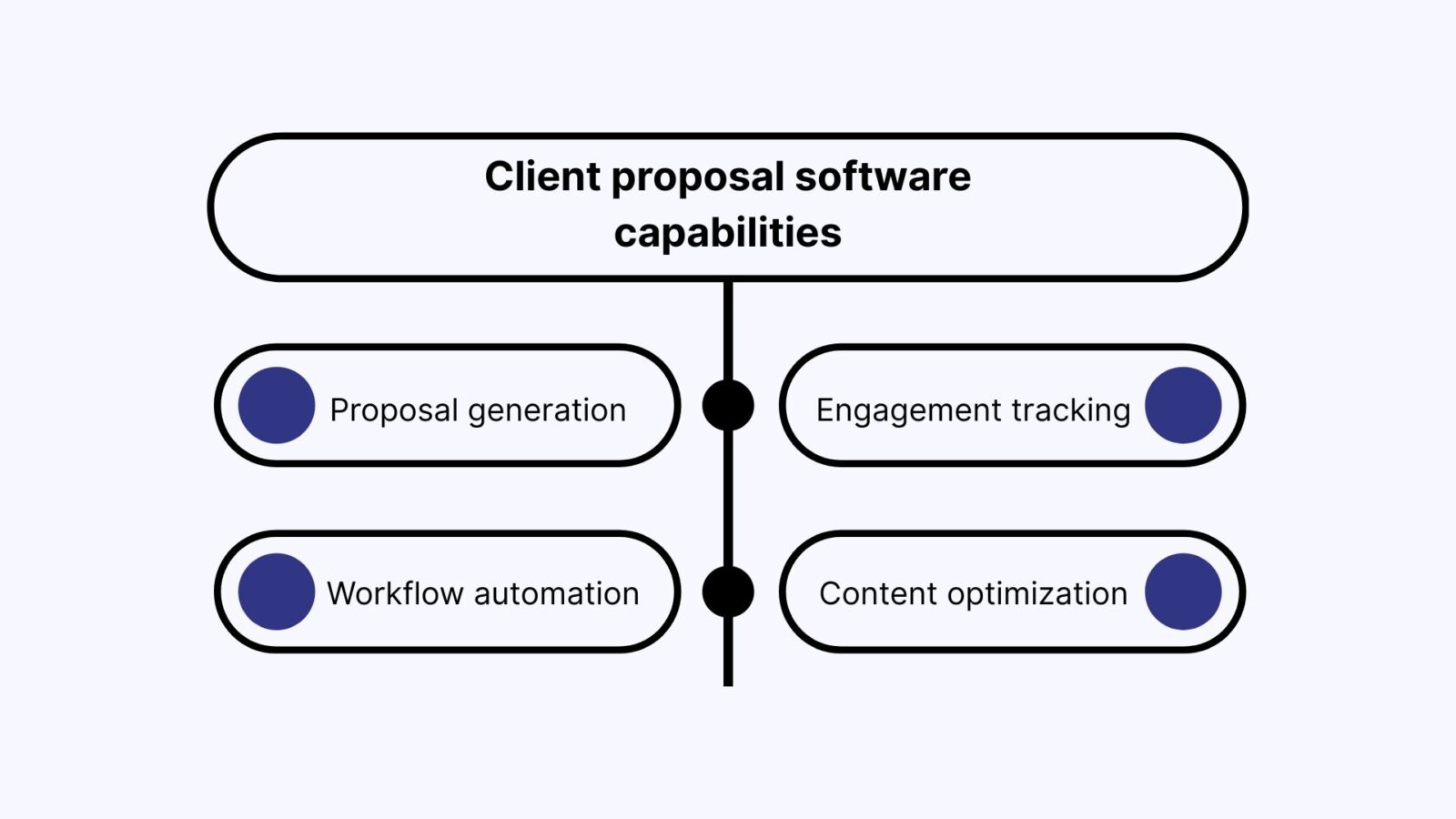
This is not the easiest definition to handle, so here are some of the key capabilities of client proposal software:
- Content generation: Proposal writing software can draft sections and adapt your existing content to new contexts. These tools ensure consistent messaging across all documents.
- Automation and workflow management: Additionally, these platforms can automate repetitive tasks and integrate with CRMs, such as Salesforce and Zoho CRM, to pull client data and update the sales pipeline management system.
- Proposal analytics and engagement tracking: AI solutions can also show how prospects interact with sent documents. Some apps even trigger automatic notifications when customers open the offer.
- Content optimization: Lastly, some of the best AI tools for proposals also proofread the document and suggest improvements to increase its readability and persuasiveness.
What Are the Main Types of AI Proposal Software?
There are 4 categories of AI proposal creation software based on the problem they solve: proposal creation and automation platforms, RFP response management systems, AI writing assistants, and all-in-one document lifecycle platforms.
Below, you will find 4 main types of proposal AI, their use cases in consulting, and who needs it:
|
Types of AI Proposal Software
|
Use Cases
|
Best For
|
Examples
|
|---|---|---|---|
|
Proposal creation & automation platforms
|
Sales proposals, service agreements, client quotes, project proposals
|
Agencies, consultants, and professional services firms that create 10-50+ proposals per month
|
Sembly, Proposify, Better Proposals, Qwilr, Bidsketch, Proposable
|
|
RFP response management systems
|
Government bids, enterprise RFPs, security questionnaires, RFQs
|
Organizations that regularly respond to formal RFPs, where compliance and completeness matter as much as quality
|
Loopio, Responsive
|
|
AI writing assistants & content generators
|
Content drafting, executive summaries, project descriptions, value propositions, case study writing
|
Agencies and consultants who need help articulating their value, crafting compelling narratives, or maintaining consistent quality
|
Sembly, Proposify
|
|
All-in-one document lifecycle platforms
|
Full document workflow: proposals that convert to contracts, contracts that route for approval and signatures, signed contracts that trigger payment collection
|
Growing businesses that often switch between separate tools for proposals, contracts, signatures, and payments
|
GetAccept, Bookipi, Hubflo
|
What Are the Benefits of Using AI Proposal Software?
By this section, you should be confident with the definition, so let’s move further. The next question you probably want to answer is: What are the benefits of AI proposal software?
Long story short, AI proposal management software offers 4 benefits for professional teams and consulting specialists: improved messaging consistency, proposal performance analytics, automated error detection, and intelligent content recommendations based on past wins. Overall, the value of the tool is reflected in how the system learns, connects data across your business, and fundamentally optimizes your sales process.
Traditionally, I have outlined the main benefits of business proposal software in detail:
- Message consistency: The AI proposal tools ensure every team member uses your best-performing language. Junior consultants access the same winning case studies, value propositions, and service descriptions that close deals for senior partners.
- Searchable competitive intelligence: Most platforms analyze which sections get engagement, what pricing meets resistance, which proposal structure closes faster, and how different client types respond to different approaches.
- Automatic error detection: The AI proposal writing tools scan for conflicting content across proposal elements before you send, ensuring the end version is accurate and professional.
- Personalized proposal recommendations: The AI solutions can track which content closes more deals and automatically suggest the winning version for the next client.
As you can see, professional proposals take less time to create, close at higher rates, and improve automatically. I mean, what else can you ask for, right?
10 Best AI Proposal Software Solutions
There is one rule to remember: the best AI proposal software for your business depends on your workflows and needs. Are you a solo consultant who needs speed and simplicity? Are you interested in solutions that provide integrations with CRM and collaboration tools? Or are you an enterprise responding to RFPs that need compliance tracking? Try to carefully think before we move to the tools. Once you have the answer, you are ready for the main part of this article: AI proposal tools.
Below, you will find online proposal software for freelancers, small consulting businesses, and large agencies. I have tried to choose tools that cover different needs but still revolve around helping proposals shine.
1. Sembly
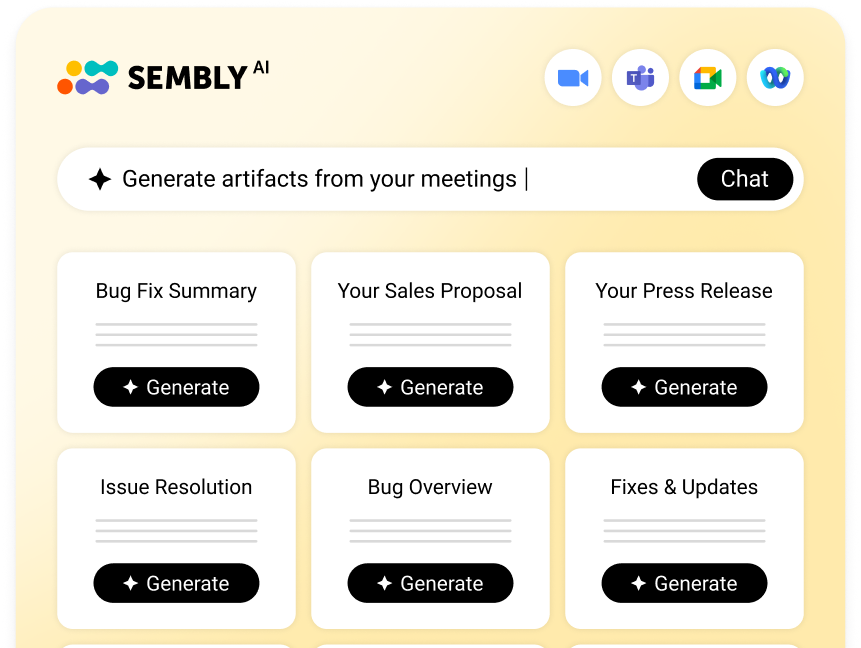
Sembly is an advanced AI meeting assistant that generates proposal drafts and project documentation based on the content. It automatically captures, transcribes, and analyzes conversations to extract actionable insights, such as risks, issues, achievements, or notable events. The app also creates a list of tasks, including their descriptions, owners, and deadlines, helping consulting professionals manage multiple projects simultaneously.
Key Features
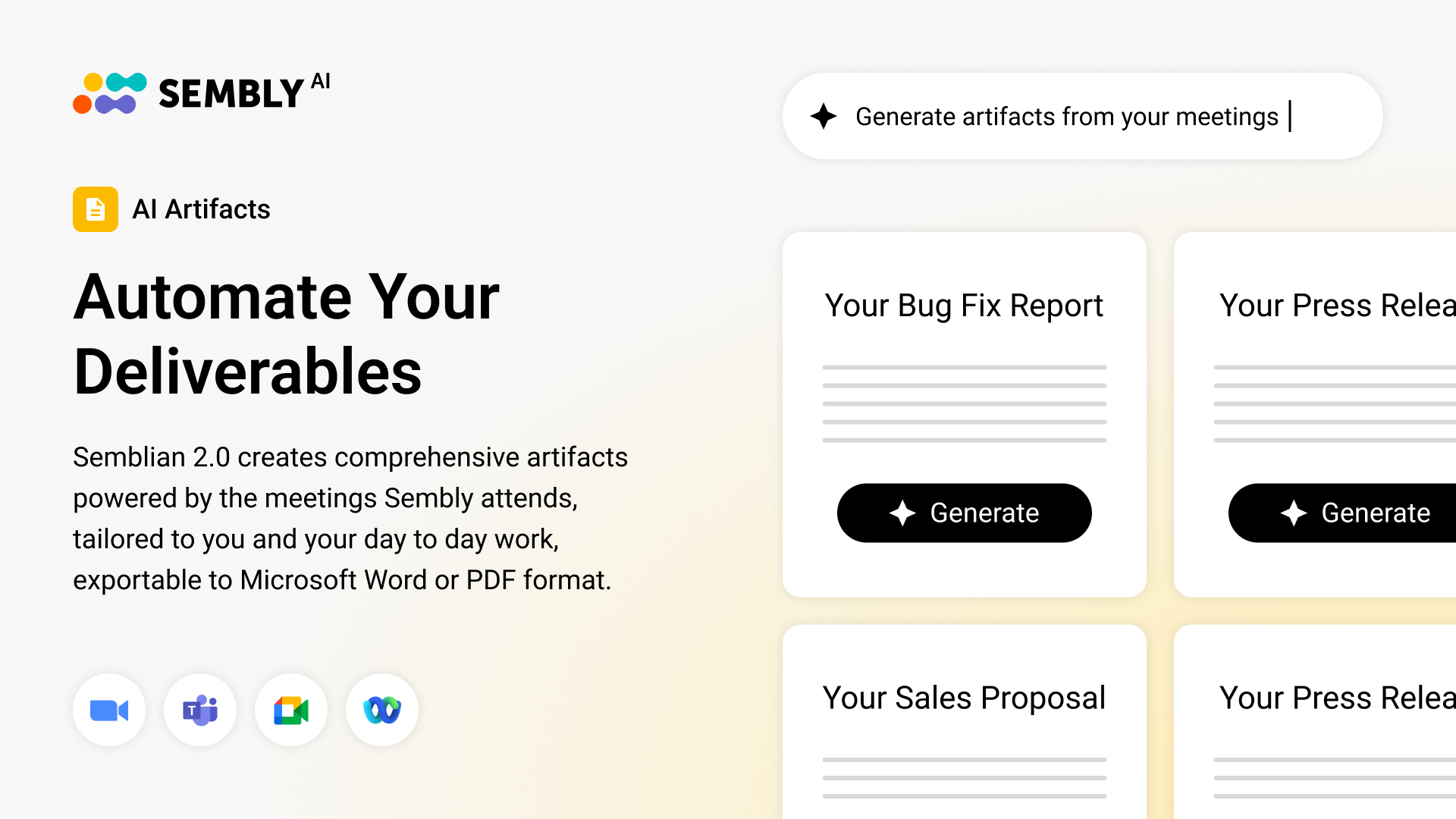
- Automated deliverables: Sembly can draft follow-ups and project documentation, including proposals based on the available meeting content.
- AI insights: The app extracts key points from each conversation, including achievements, risks, issues, and notable events.
- Meeting notes and summaries: Sembly generates precise notes and summaries and supports multilingual client discussions in over 45 languages.
- Tasks: The solution also extracts action items with descriptions, owners, and deadlines from each call with the client, ensuring consultants and professional teams track every commitment made during sales conversations.
- Seamless integration: The tool integrates with documentation, analytics, productivity, project management, and collaboration tools.
- Searchable conversation library: The app provides a searchable meeting library to reference specific client commitments when finalizing proposals, as well as an option to sort meetings by Collections.
- Enterprise-grade security: Sembly ensures enterprise-level security, including encrypted recordings, SOC 2 and GDPR compliance, and role-based access controls to protect confidential client discussions.
Best For
Consultants and professional services companies that want to use AI for extensive discovery calls and heavily depend on capturing detailed client requirements. Overall, it is a great choice for teams that want to optimize the post-meeting proposal writing.
2. Proposify
Proposify is a business sales proposal software for teams that prioritize speed, brand consistency, and native integration options. It provides a drag-and-drop editor with pre-built proposal templates, a content library for reusable sections, and analytics showing which variants drive engagement. The platform integrates with CRM platforms, such as Salesforce, Gong, and HubSpot, automatically updating deal stages as proposals progress.
Key Features
- Drag-and-drop builder: Proposify offers a visual proposal editor with customizable templates and branding.
- AI proposal-generator: The platform uses artificial intelligence to create high-quality content for proposals and templates.
- Engagement tracking: Sales and consulting teams receive instant notifications when prospects open, view, or share proposals, with detailed analytics on engagement.
- Native CRM integration: The tool syncs with Salesforce, HubSpot, Gong, and Pipedrive, pulling client data and updating deal stages as proposals progress.
- eSignature: Proposify includes approval workflows and digital signatures to close deals faster.
Best For
B2B sales teams and agencies sending 20+ proposals monthly, who need proposals synced with their sales pipeline management system. The tool is perfect for businesses where speed and CRM integration matter more than complex document workflows.
3. Better Proposals
Better Proposals is a design-focused proposal platform that offers professional proposal templates, interactive pricing tables that let clients customize packages, and detailed analytics tracking. Overall, the platform focuses on reducing proposal creation time while maintaining high design quality, with features such as content libraries and automated follow-ups that help progress deals further.
Key Features
- Interactive pricing tables: Clients can customize service packages and see pricing options with auto-calculations in real-time.
- Detailed engagement analytics: The platform tracks time spent per section and interaction patterns to reveal what prospects care about most.
- Integrated payments: Digital signatures and Stripe, PayPal, and GoCardless integration enable payment collection directly through the proposal.
- Automated follow-ups: The system sends customized follow-up emails when prospects have not responded to proposals within set timeframes.
- Responsive design: Better Proposals professional and visually-appealing proposals that look effective on any device.
Best For
Creative agencies, consultants, and professional services organizations where visual presentation significantly impacts win rates.
4. Qwilr
Qwilr is an interactive proposal builder that creates web-based proposals with embedded media, live pricing calculators, and one-click accept buttons. The tool lets professionals send prospects interactive pages they can explore, with features such as ROI calculators, video testimonials, and configurable pricing options. The platform tracks engagement in real-time and integrates with CRMs and payment processors, turning proposals into complete sales experiences.
Key Features
- Interactive web pages: Qwilr creates engaging web experiences with embedded videos, images, and interactive elements.
- Live pricing calculators: The app lets prospects adjust project scope, select add-ons, and see pricing updates instantly.
- One-click acceptance: Integrated eSignature and QwilrPay payment processing let clients accept proposals and pay deposits without leaving the page.
- Real-time notifications: Sales or consulting professionals get instant alerts when prospects view, interact with, or share proposals.
- Embedded ROI calculators: Custom calculators enable prospects to input their numbers and see the projected value.
Best For
SaaS companies, digital agencies, and modern service businesses that sell to tech-savvy clients who expect interactive experiences.
5. Bookipi
Bookipi is an invoice app that combines proposal creation, contract management, and billing in one platform. It is built specifically for freelancers and solo consultants. It lets professionals create client proposals with customized service descriptions and pricing, convert accepted proposals into contracts with digital signatures, and generate invoices based on agreed payment terms.
Key Features
- All-in-one workflow: Bookipi handles proposals, contracts, and invoicing in one proposal management software.
- AI contract generator: The tool can draft professional contracts based on the provided requirements.
- Payment tracking: The platform monitors invoice status, sends automated reminders for overdue payments, and tracks which clients pay on time.
- Simple pricing templates: Pre-built service packages and pricing structures help solo consultants create consistent proposals quickly.
- Appointment scheduling: Automated meeting scheduling feature helps consulting professionals set up appointments without double-booking or hassle.
Best For
Freelancers, independent consultants, and solo contractors who need a simple, all-in-one solution for proposals, contracts, and invoicing.
6. Bidsketch
Bidsketch is a client proposal software that focuses on helping small businesses and freelancers create professional proposals. It offers industry-specific proposal templates based on thousands of successful proposals, a content library for storing reusable sections, and eSignature for immediate client acceptance. Overall, the app prioritizes simplicity and speed over complex features.
Key Features
- Industry-optimized templates: Bidsketch provides pre-built proposal templates of successful proposals across different industries and project types.
- Content library: The content library stores reusable proposal blocks that professionals can quickly assemble into customized proposals.
- Electronic signatures: Bidsketch offers built-in eSignature functionality, which provides legally binding client acceptance.
- Fee calculator: The tool also helps consultants and contractors calculate project costs based on hourly rates, materials, and expenses.
- Automated workflows: Bidsketch lets professionals set up automated messages once prospects sign their proposals.
Best For
Small consulting firms, freelancers, and contractors who need a simple system to speed up the process.
7. Hubflo
Hubflo is a client management platform that combines proposal creation with project onboarding and task management. It lets agencies and consulting companies create proposals with service packages and pricing, and convert accepted proposals into client portals with project timelines, task lists, and collaboration spaces. Overall, the platform closes the gap between sales and delivery, ensuring nothing gets lost in the handoff process.
Key Features
- Client portal creation: Hubflo provides customizable client-facing portals where clients can access files, messages, tasks, and billing in one centralized workspace.
- Task and project management: The platform includes shared task boards where teams and clients can collaborate, assign tasks, track progress, and provide feedback.
- Integrated billing and invoicing: Built-in invoicing with payment processing through Stripe, automated payment tracking, and revenue collection management.
- Document and file sharing: Secure file exchange with clients from multiple sources, including Google Drive, Dropbox, and direct uploads.
- Messaging and collaboration: Centralized communication tools, including instant messaging, file sharing, and internal-only notes for team coordination.
Best For
Agencies and consulting organizations that need a unified client management system combining project delivery, communication, and billing.
8. Proposable
Proposable is a sales proposal automation platform that focuses on template customization and content reusability for consistent documentation. It provides a visual editor for building branded proposals, a content library organized by proposal elements, and analytics tracking proposal engagement. The platform integrates with popular CRM platforms and includes eSignature functionality.
Key Features
- Sales content library: The platform categorizes reusable sections by type, making relevant content easy to find and insert.
- Sales-focused analytics: Track which proposal sections prospects spend the most time on, revealing objections or areas of interest.
- Team performance tracking: Managers can view team-wide statistics and assess proposal creation time, approval rates, and individual win rates.
- Payment collection integration: The tool accepts deposits or full payment immediately upon proposal acceptance, reducing post-signature payment delays.
- Built-in approvals: Internal approval workflows route proposals through stakeholders before sending, with tracked changes and comment threads.
Best For
Sales professionals who manage high proposal volumes and require analytics that shape their sales strategy.
9. GetAccept
GetAccept is a digital sales room platform that combines proposal creation with video messaging, live chat, and eSignature. It lets agents record personalized videos that auto-play when prospects open proposals and receive activity-based notifications. Prospects, on the other hand, can chat with the sales team in real-time. The platform also tracks when proposals get forwarded to additional stakeholders and creates dedicated deal rooms where all parties access proposals and discussion threads throughout the sales cycle.
Key Features
- Personalized video messaging: The tool lets professionals record and embed custom videos within proposals that auto-play when opened.
- In-document live chat: Prospects chat with the sales team in real-time, getting immediate answers to their concerns.
- Deal room collaboration: GetAccept lets specialists create dedicated spaces for each opportunity where all stakeholders can access proposals, collateral, mutual action plans, and discussion threads.
- Multi-stakeholder visibility: The app lets teams track when proposals get forwarded internally and identify new decision-makers.
- Complete document lifecycle: The solution also helps manage proposals, contracts, and renewals in one system with version control, eSignature, and full audit trails for compliance.
Best For
Relationship-focused B2B sales teams that sell complex solutions and deal with long sales cycles and multiple decision-makers.
10. Loopio
Loopio is an RFP response management platform for professional teams that handle formal requests for proposals, RFQs, and security questionnaires. The platform maintains a centralized content library with approved answers to common RFP questions, as well as uses AI to match new questions to relevant existing answers. Loopio extracts questions from the uploaded RFP documents, organizes them by topic, and routes sections to appropriate subject matter experts.
Key Features
- Intelligent suggestions: AI analyzes RFP questions and automatically suggests relevant answers from your library.
- Centralized answer library: Subject matter experts maintain one source of truth for approved responses, organized by topics.
- Expert recommendation: AI identifies which internal subject matter experts are best suited to answer specific questions based on past contributions.
- Compliance matrix: Built-in matrices ensure every RFP question is answered, flagging gaps and tracking completion status.
- Response quality scoring: AI analyzes your draft responses for readability issues.
Best For
Enterprises, government contractors, and organizations where compliance, accuracy, and team coordination across departments are critical.
How to Choose the Best AI Proposal Software for Your Business
Now that the cherry of this article (my list of tools) is over, let’s help you choose the right app. The key to choosing proposal software lies in identifying which specific problems you need to solve.
This checklist walks you through the decisions that determine whether software solves inefficiencies in your workflows or creates new ones.
- Identify problems you want to solve: Assess which proposal stages take the most time. Track your last 10 proposals and calculate hours spent at each stage to determine bottlenecks.
- Match software to team size: Document how many people need to review, approve, or contribute content before proposals get sent. Consider what happens after acceptance.
- Calculate revenue impact: Analyze whether faster proposal creation would let you pursue more opportunities or respond to time-sensitive RFPs. Determine if one additional closed deal per year would cover the annual software cost.
- Run structured trials: Test integrations with CRM data and have team members who’ll use it daily try the interface. Pay attention to friction points that appear during normal use.
- Verify exit options: Explore how you can export content, including formats available, fees, what data is supported, and what the cancellation process involves.
This way, you ensure proposal software solutions actually solve problems relevant to your industry. For instance, construction businesses blend proposal platforms with construction management software, such as Procore or BuilderTrend. Healthcare providers, on the other hand, often integrate Epic or Cerner systems with their proposal tools.
What Are the AI Proposal Software Results?
Okay, now you have probably determined the tool that aligns with your workflows best. It is time to answer the next question: What kind of results can you expect from it?
As a fan of numbers, I have found a few statistics showing the results that top AI proposal writing software promise to deliver:
- More than 40% proposals convert to closed deals within 24 hours of being opened (Proposify).
- Teams reclaim 50% of the time previously spent on RFP responses annually (Loopio).
- Creating sales documents takes 75% less time than traditional methods (Qwilr).
- Proposify’s average close rate reaches 2x what’s typical across industries.
- Organizations complete 25% more RFPs with the same resources (Loopio).
- Sales cycles compress by 20% from initial contact to signed agreement (Qwilr).
These statistics show that effective AI proposal software positively impacts speed, volume, and conversion simultaneously. The key is choosing the solution that fits your business and helps cover gaps in proposal workflows.
Wrapping Up
AI proposal software is one of the clearest ROI opportunities in modern sales, provided it matches actual needs. The key is to understand your problems and choose the platform that focuses on solving your pain points. The right solution will help you centralize the best content, track prospect engagement, and learn from every proposal you send to improve future performance.
In this article, we have examined AI proposal software definitions, explored 4 main types, reviewed key benefits, as well as compared the best proposal software. I hope you have found the next addition to your proposal toolset in our list. Good luck!
FAQ
What is proposal management software?
Proposal management software is a platform that centralizes the creation, collaboration, approval, delivery, and tracking of business proposals in one system. It reduces manual copying, pasting, formatting, and version control that defines traditional proposal processes.
What are the benefits of AI proposal software?
Here are the main benefits of AI proposal software:
- Message consistency: Content libraries with AI suggestions ensure every team member uses the best-performing language automatically.
- Competitive intelligence: The platform analyzes every proposal, tracking which sections get engagement, which structures close faster, and how different client types respond to different approaches.
- Automatic error detection: AI checks for conflicting content across proposal elements.
- Engagement analytics: Real-time tracking shows exactly when prospects open proposals, how long they spend on each section, whether they shared it, and which content they revisited.
- Compounding improvement Each proposal feeds the system data that makes subsequent proposals more effective automatically.
What are the key features of sales proposal software?
Here are the key features of sales proposal software:
- Template library with customization
- Content library with intelligent search
- CRM integration with data sync
- Collaboration and approval workflows
- Engagement analytics and notifications
- eSignature and acceptance tracking
- Interactive pricing tables
- Payment integration
How do you choose the best-fitting AI proposal software?
Here are the steps to choose AI proposal software that will optimize your workflows best:
- Identify bottlenecks:
Audit your recent proposals and record time spent at each stage. Identify the slowest step and select software that automates that exact stage. - Match the tool to how your team operates:
List everyone involved in proposal creation and approval, along with their roles. Ensure the tool supports reviews, edits, approvals, and post-acceptance handoff. - Estimate revenue impact:
Define what improvement looks like for your team. Set baseline metrics for proposals per week, average deal value, close rate, and turnaround time. - Run a structured trial:
Test the tool on 2-3 proposals. Score each using the same criteria: scope accuracy, time to first draft, edit effort, approval friction, and client-ready quality. - Check integrations:
Confirm the tool integrates with your existing stack and fits where proposals are written, reviewed, sent, and converted into delivery. - Verify exit options:
Confirm export formats, data retention and deletion policies, admin controls, and whether templates and proposal history remain accessible after cancellation.
What is the best proposal software for consultants?
Sembly is the strongest option when your proposals come from conversations, such as discovery, scoping, stakeholder calls. It can draft consulting proposals, briefs, and project plans based on meeting content, so your offers reflects the client’s needs and pain points.
- Multi-meeting chats
- AI Insights
- AI Artifacts

You might also like