AI, Automation, Sales
How to Create a Sales Plan: Steps, Templates, and Examples
Updated: December 9, 2025 · 12 min read

Table of Contents
ToggleDo you know what almost 15% of successful salespeople have in common (Hubspot)? Clearly set goals and a solid understanding of how to reach them. Success has nothing to do with luck, and behind every record-breaking quarter is a strategic sales plan. It aligns professionals and sharpens their focus, ensuring they reach targets. However, what if you are new to the role? Where do you start your preparation? With so much to master, it is hard to determine the first steps, which either set you on the right path or become the first “life lesson”.
In this article, you will learn exactly how to create an impactful sales plan step by step. There are practical templates, examples, and best practices to help you navigate the process with confidence. Let’s dive in!
What Is a Sales Plan?
A sales plan is a structured roadmap that outlines sales goals, the strategy to achieve them, the required resources, and the timeline. It determines responsibilities, sets clear KPIs, and connects daily actions to revenue. The purpose of this document is to describe how professionals can reach their targets and excel in their sales activities.
Example: If your team’s Q1 revenue target is $50,000, a sales plan should include the number of deals, average deal size, target customers, territories, outreach activities, and follow-up sequence.
What Are the Key Components of a Sales Plan?
There are 7 essential components to a comprehensive sales plan. These include goals, target audience, sales methodology, team structure & responsibilities, prospecting strategy, performance metrics, and tools.
Let’s discuss each component in more detail and examine what you need to do:
- Sales goals: Define short-term and long-term revenue targets and break them down by team, region, representative, or product. Ensure goals are linked to measurable outcomes.
- Target customers: Describe the ideal customer profile and key buyer personas. Include industry, company size, pain points, and purchase triggers.
- Sales process and methodology: Define what qualifies a lead to move to the next stage, and choose a sales methodology: SPIN, MEDDIC, or Challenger.
- Team structure and responsibilities: Outline the roles and clarify ownership at each sales stage. Include quotas, key performance indicators, and handoff points between departments.
- Sales tactics and prospecting strategy: Describe the channels and tools sales professionals will use. Include sequence, messaging frameworks, and lead nurturing guidelines.
- Performance metrics and KPIs: Establish how you’ll measure success. Include win rate, average deal size, quota attainment, customer acquisition cost, and lead response time.
- Tools: List the platforms your team will use to execute the plan.
Why Is a Sales Plan Important?
An effective sales business plan defines your target customers, outlines the prospecting strategy, and sets performance metrics to track success, but you already know that. I suggest that we take a closer look at some of the overlooked benefits of this document:
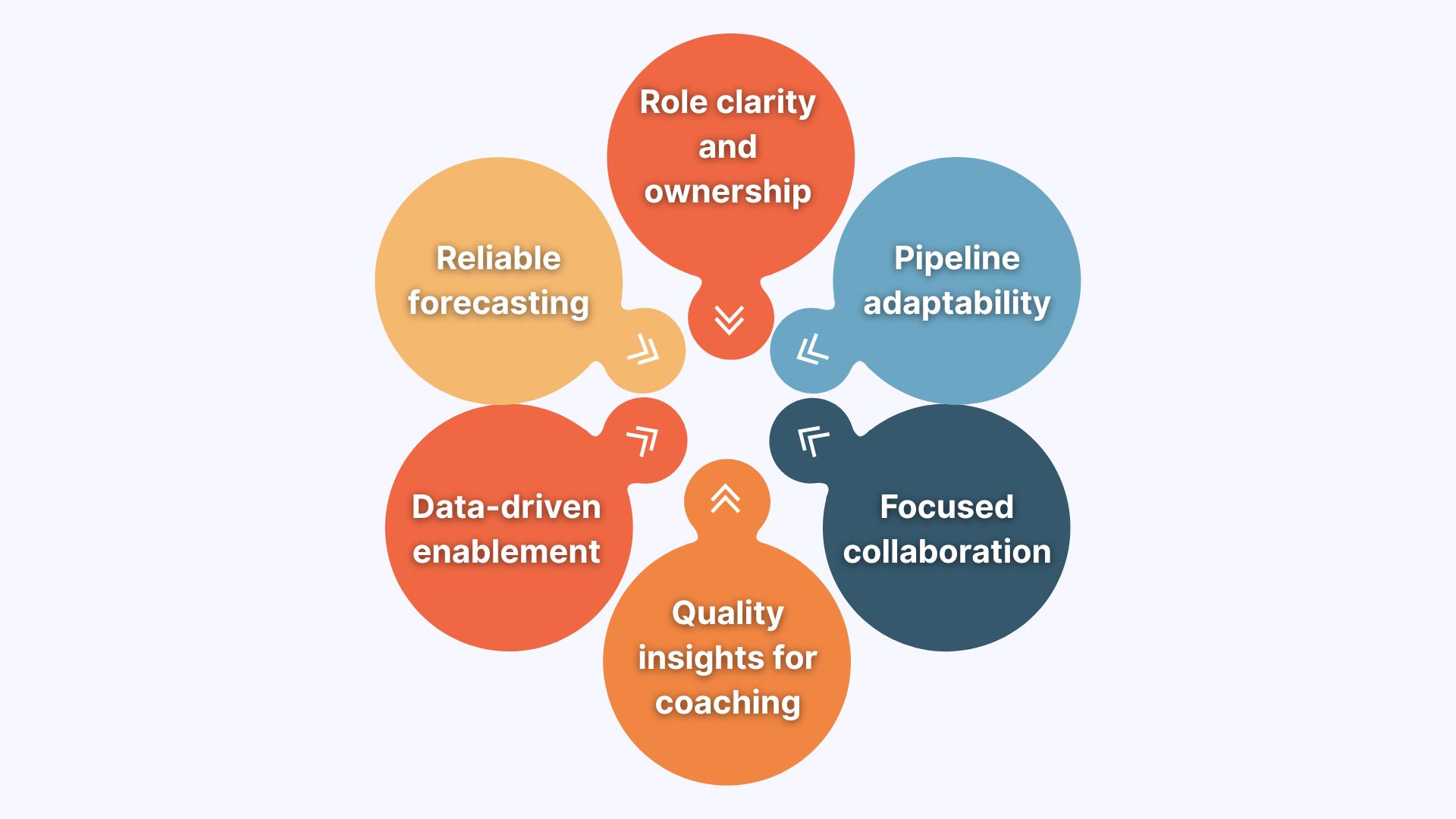
- Reliable forecasting: With defined conversion rates, the length of the sales cycle, and deal velocity per stage, leaders can forecast based on available data.
- Pipeline adaptability: An effective sales plan usually includes checkpoints for reviewing pipeline health, adjusting goals, and reassigning agents based on their performance or market shifts.
- Improved enablement: The document can help identify the tools the team needs: CRM software, conversation intelligence, or lead routing apps.
- Quality insights for coaching: Sales managers can also use sales plan templates to analyze top performers and coach others based on the insights.
- Focused collaboration: Sales planning aligns sales, marketing, product, and customer success around a shared target
- Role clarity and ownership: The document ensures every sales representative is aware of their quota and sales stage responsibility.
Furthermore, sales organizations that structure their plans around actionable insights and align sellers with specific parts of the sales process are 2.5 times more likely to be top performers (Gartner). What else can you ask for?
How to Create a Sales Plan Step-by-Step
A solid sales plan template is the foundation for future team success, so considering its importance, there is no room for mistakes. Every part of the plan must be intentional, trackable, and aligned with the broader revenue goals.
Below, I have prepared 7 key steps to build a sales plan, including recommendations and examples to help you understand the path.
1. Start with Customer and Market Analysis
Gather data on market conditions, customer base, and competitive landscape to understand demand trends, as well as opportunities or potential threats. Analyze customers’ interests, pain points, how competitors position themselves, and what gaps exist in your niche.
Here is what a comprehensive analysis should cover:
- Total available market and current penetration
- Ideal customer profiles and detailed buyer personas
- Common objections or obstacles in your niche
- Competitive positioning
2. Set Sales Goals and Revenue Targets
Define the specific outcomes your team needs to achieve, such as revenue goals, deal volume, upsell targets, or sales pipeline size. Break them down by region or customer segment, and assign a deadline and owner to each. I recommend using historical data from CRMs like HubSpot, Salesforce, or Zendesk Sell for realistic benchmarks.
Sales goals template: Close [Revenue Goal] in new business by [Time Period] → Each [Role Name] must close: [Monthly Quota] per month. Deals needed per month: [Number of Deals] per month across [Number] verticals. Target ACV: [Value].
3. Define Sales Roles and Team Structure
Outline who is responsible for each stage of your sales process. Assign specific roles and ensure every handoff is clear. Consider team size, territories, product coverage, and skill alignment to reduce overlaps and accelerate execution across the team. You can also use a RACI matrix to ensure accountability is at its best.
Here is an example of how team structure looks:
- SDRs manage cold outreach and qualify inbound
- Account executives handle demo calls and proposals
- Account managers upsell and manage renewals
- Operations managers support data, manage sales tools, and handle reporting
4. Map Out the Sales Process and Choose a Methodology
Outline all sales stages prospects move through and set entry/exit criteria for each. Try to link your process with a specific sales methodology, such as Challenger, SPIN, or MEDDIC, to coach sales staff on how to ask questions, handle objections, and qualify deals.
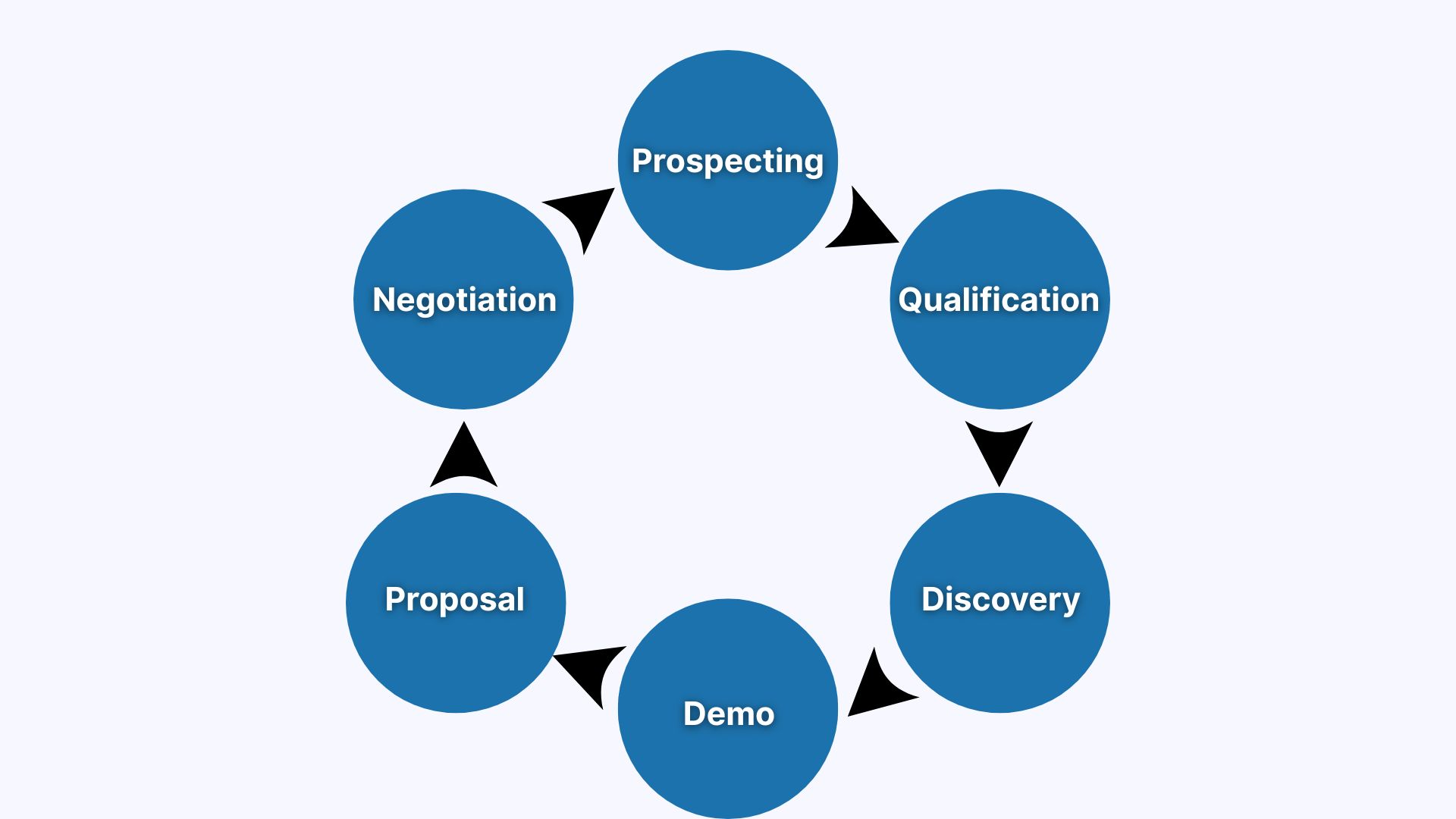
Traditionally, I have prepared another example of what a 6-stage process could include:
- Prospecting
- Qualification
- Discovery
- Demo
- Proposal
- Negotiation & Close
5. Plan Prospecting and Outreach Strategy
The fifth step is to choose the outreach channels your team will use to connect with leads. For example, cold calls, email sequences, LinkedIn, webinars, or referrals. It is also best to set expectations for timing, volume, messaging frameworks, and lead qualification. Once you build sequences that match your buyer personas, you are one step closer to success.
Tip: You can use AI-driven insights from Sembly, Gong, or Aircall to personalize outreach and enrich it with use cases and objections.
6. Choose and Monitor the Team KPIs
Select a set of KPIs that reflect your business objectives best. You can consider including win rates, sales cycle length, average deal size, lead response time, or quota attainment. Define how these metrics are calculated, where they’re tracked, and how often they’re reviewed.
Tip: You can set up dashboards using HubSpot Reports, Google Data Studio, or Looker to visualize trends in real time.
7. Build Regular Feedback Loops
Lastly, set up feedback loops so that your sales plan template develops with your team and the market. Create a shared playbook or sales wiki to document changes and interesting findings to educate professionals on best practices. You can also use quarterly business reviews, pipeline check-ins, and deal syncs to adjust goals, messaging, and tactics.
Here are a few examples for your meeting schedule:
- Monthly pipeline reviews with the sales team and marketing to stay aligned
- Quarterly one-on-ones to review KPIs and blockers
How Sembly Can Automate a Sales Plan
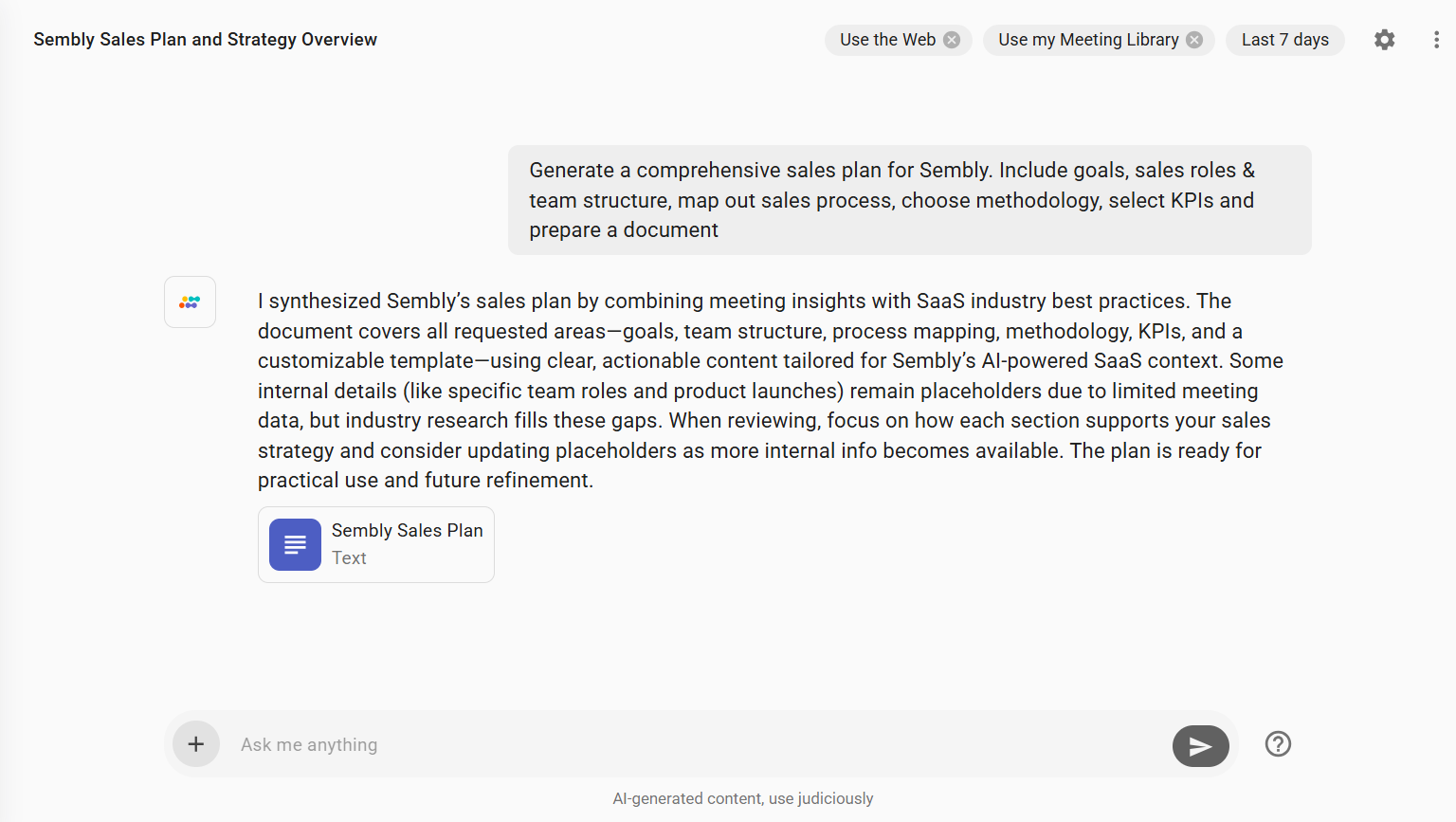
Did you know that sellers who effectively partner with AI tools are 3.7 times more likely to meet quota than those who do not (Gartner)? Surely, it heavily depends on the app itself, but I have a great solution designed to automate deliverables within minutes: Sembly AI. It automatically transcribes and summarizes your negotiations, analyzes trends across meetings, and integrates with CRMs, collaboration, documentation, and project management apps. Most importantly, it can generate comprehensive sales documentation based on the meeting content.
Here is how you can automate your sales plan template:
- Open My AI Chats in the Semblian 2.0 section.
- Click the New AI Chat button in the upper-right corner.
- Ask Sembly, “Generate a comprehensive sales plan for [Company Name]. Include goals, sales roles & team structure, map out sales process, choose methodology, select KPIs.”
- Enjoy the sales plan!
Effective Sales Plan Templates
Now that you understand all the components, automation tips, and reasons, I suggest that we move to the main part: sales plan templates. I have prepared 3 main variants you can use as a foundation for your planning process. Each aligns with the best practices and includes the core elements we have discussed.
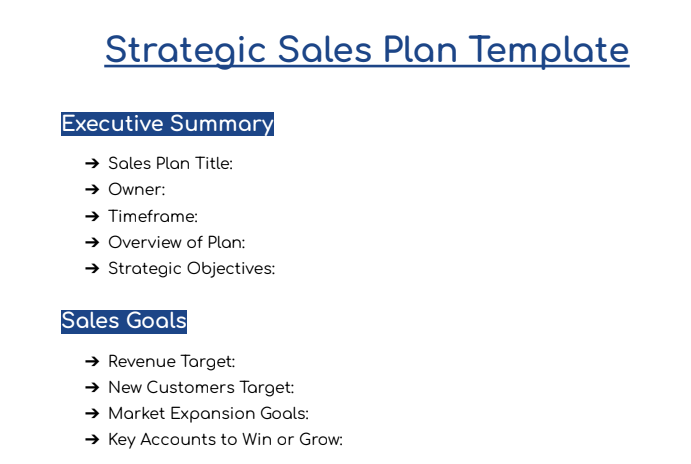
Strategic Sales Plan Template
This sales action plan template helps professionals outline objectives, define ICPs, track KPIs, and map revenue growth quarter by quarter. It is a good choice for long-term planning across enterprise or startup teams. This example works best for annual and quarterly planning across B2B, SaaS, or agency employees.
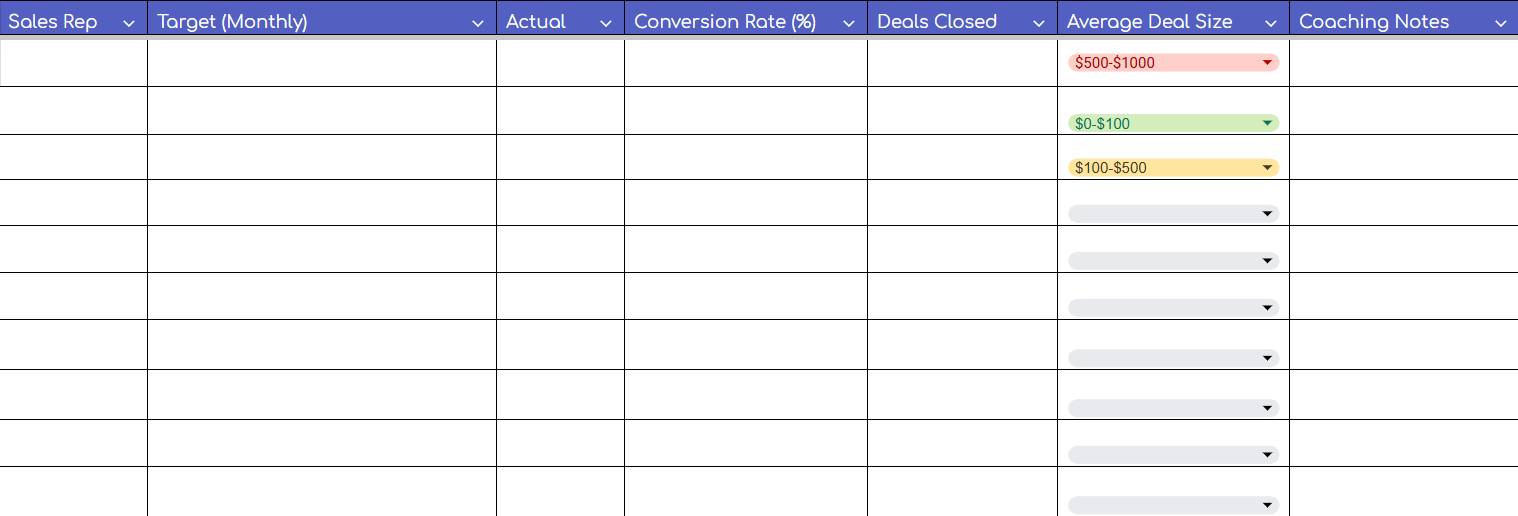
Monthly Sales Targets & Quotas Template
This sales plan template is ideal to set track, and adjust monthly sales targets in a structured dashboard. It lets professionals assign quotas by representative, region, or channel, and visualize actual vs. expected targets. This example works best for revenue forecasting, team performance reviews, and tactical tracking.
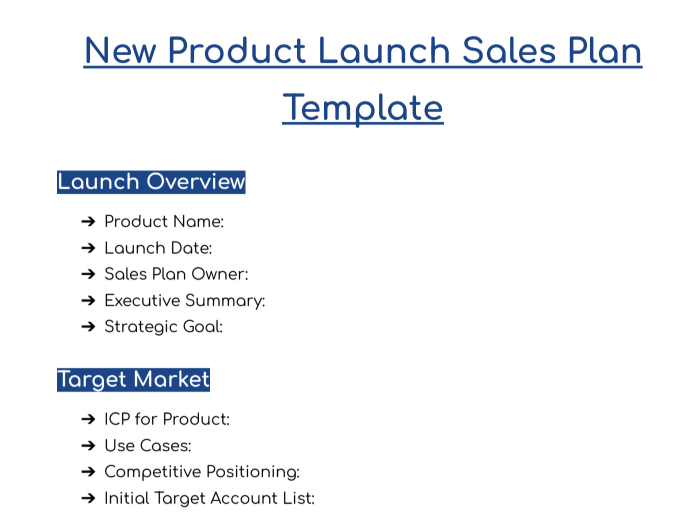
New Product Launch Sales Plan
This sales strategy template example helps align sales, marketing, and customer teams. It defines launch goals, messaging, buyer personas, pricing strategies, and lead generation channels. It is the best choice for SaaS and eCommerce teams launching new SKUs, features, or offers.
3 Examples of Sales Plans for Different Industries
What’s a great article without some practical sales plan examples? In this section, we will review three samples for different businesses: B2B SaaS, eCommerce, and Professional Services. These will help you gain a better understanding of how this document looks in practice, making it easier to create your own.
Sales Plan Example for B2B SaaS
Plan Title: Q1 Strategic Sales Plan
Owner: VP of Sales, John Smith
Timeframe: January-March 2026
Objectives
- Close $1.5M in new ARR
- Expand 5 current enterprise accounts
- Boost average deal size from $8K to $10K
Target Audience: Mid-market tech and consulting firms (200–1,000 employees)
Primary buyer: Director of Operations / Sales Enablement Lead
Sales Strategy
- Outbound focus with SDRs targeting accounts using Salesloft or Gong
- Partner-led GTM strategy for European market growth
- Run 2 industry-specific webinars: Tech + Legal AI Enablement
Sales KPIs
- 60 SQLs/month
- 30% demo-to-close rate
- 2.5x pipeline coverage
Tools
- Salesforce CRM
- Sembly AI notetaker
- HubSpot sequences
- LinkedIn Sales Navigator
Sales Plan Example for eCommerce
Sales Plan Title: Q2 Growth Plan for EcoHome Organics
Owner: Head of Growth
Timeframe: April-June 2026
Key Objectives
- Reach $850K in revenue in Q2
- Launch new product line
- Improve the returning customer rate from 18% to 25%
Target Audience: Millennials & Gen Z families, USA-based, eco-conscious
Top channels: Instagram, TikTok, Organic Search
Sales Strategy
- Launch influencer campaign
- Offer a 15% subscription discount for product bundles
- Test SMS campaigns + A/B test subject lines
Sales KPIs
- ROAS target: 3.5x
- New customers: 5,000+
- CAC: under $35
- Returning customers: 25%
Tools
- Shopify
- Klaviyo
- GA4
- Postscript SMS
- Sembly AI
Sales Plan Example for Professional Services
Sales Plan Title: FY2026 Enterprise Growth Plan for AgileBridge Consulting
Owner: Managing Partner
Timeframe: January-December 2026
Sales Objectives
- Acquire 10 new enterprise clients
- Grow average contract size to $120K+
- Increase referral pipeline by 25%
Target Audience: CIOs, Heads of Transformation in Financial Services
Geography: US & UK
Sales Strategy
- Improve conference speaking engagements (PMI, AgileEurope)
- Build new proposal templates by industry
- Launch email outreach focusing on case studies
KPIs
- 30 qualified leads/quarter
- 40% proposal acceptance rate
- 15% YoY revenue growth
Sales Tools
- Notion CRM
- PandaDoc
- Loom
- Sembly AI
3 Best Practices for Successful Sales Planning
We can all agree that a sales target plan is only as effective as the strategy behind it. After all, it’s the minor daily practices that determine whether you hit or miss the mark. In this section, we’ll explore 3 simple yet worthy practices to help avoid misalignment and improve task execution from the inside.
1. Align Your Sales Plan with Market Maturity
Adjust your sales approach based on the maturity of your niche. Early-stage markets prioritize education, discovery, and concierge MVPs to validate demand. Mature markets, on the other hand, respond to polished positioning, tight integrations, and proof of ROI.
Here are a few questions you may ask yourself during this stage:
- Is the market still in early development stages, or is it already saturated with similar tools?
- How do competitors speak, and what white space can we own?
- Should our sales strategy plan focus on discovery or positioning?
2. Segment Sales Targets by Persona and Channel
Define your ideal customer profile, key personas, and map revenue expectations accordingly. Effective sales plans usually break down goals by audience and acquisition channel to improve the results of your outreach and close rates. This approach will help you ensure the targets are realistic and scalable.
Let’s take a closer look at an example of how it looks in practice:
- Inbound: 30 demos/month → 15% close rate
- Outbound enterprise: 5 meetings/month → $50K ACV
3. Connect Sales Activities to Buyer Milestones
Map each sales activity to a specific milestone in your buyer’s decision journey. Connect your demos or calls to signals such as “awareness created,” “stakeholder alignment achieved,” or “decision readiness confirmed.” This way, every task you complete brings your lead closer to the purchase.
Tip: Consider using CRM fields such as “Stage Exit Criteria” or “Buyer Signals” to link each activity to a milestone. This way, you can optimize forecasting quality and ensure your team moves deals forward with ease.
Wrapping Up
A good sales plan sets direction, yes, but a great one sets you on the path to success. The key? Build your plan of 5 core aspects: clear goals, defined roles and responsibilities, actionable timelines, flexible strategies, and measurable results. This way, the document has all the chances to become your playbook for consistent success.
In this article, we have carefully examined sales strategy templates, including components, creation steps, and best practices. I hope the next team plan you build will be the one to level up your results. Good luck!
FAQ
What is a sales plan?
A sales plan is a strategic document that outlines your sales goals, target customers, tactics, tools, and performance metrics. It includes specific quotas for each team member, key activities per sales stage, expected timelines, and KPIs like win rate or revenue per representative.
The plan keeps your team aligned and focused on closing deals and growing revenue.
What is a purpose of a sales plan?
A sales plan provides a structured approach to achieving sales goals. It defines target customers, sales strategies, key performance indicators (KPIs), and action steps to drive revenue growth.
Without a solid plan, sales teams often may lack direction and efficiency.
What are the KPIs for a good sales plan?
Here are the key performance indicators you can come across in a sales plan:
- Monthly or quarterly revenue targets
- Customer acquisition cost
- Sales pipeline coverage
- Win rate
- Sales cycle length
- Average deal size
- Quota attainment per representative
What are the key components of a sales plan?
A comprehensive sales plan includes:
- Sales goals and revenue targets
- Defined target audience and ICP
- Sales strategies and outreach methods
- Activity timelines and milestones
- Team roles and responsibilities
- KPIs and metrics for tracking performance
- Tools and CRM systems in use
- Budget and resource allocation
How to write a sales business plan?
Here are the steps to write a sales business plan:
- Define your sales goals
- Research your target market and ideal customers
- Break goals into team or representatives’ quotas
- Outline sales strategies and channels
- Assign roles and timelines
- Track key metrics with a CRM or dashboard
- Review and adjust monthly or quarterly
Can you automate a sales plan?
Yes! Advanced AI meeting notetakers such as Sembly AI can generate comprehensive sales plan based on the available meeting content.
Here are the steps you need to take:
- Open My AI Chats.
- Click the New AI Chat button.
- Ask Sembly to generate a comprehensive sales plan.
Within a few minutes, the app will generate a document.
What is a 30-60-90 sales plan?
A 30-60-90 sales plan outlines new goals and activities for new representatives for their first 90 days in the company.
- Day 1-30: Focus on onboarding, product knowledge, and market research.
- Day 31-60: Start building your pipeline, engage with prospects, and shadow senior agents.
- Day 61-90: Own accounts, meet KPIs, close deals, and contribute to team targets.
- Multi-meeting chats
- AI Insights
- AI Artifacts

You might also like